
Introduction
Soetpatat—Afrikaans for “sweet potato”—is a beloved South African side that turns humble spuds into something celebratory. Depending on the family recipe, it can be a neat, layered bake of par-cooked slices brushed with butter and cinnamon sugar, or a creamy mashed casserole scented with vanilla and citrus. Some cooks keep it simple and rustic; others crown it with a nutty crumble or a glossy, lightly caramelised top. However it’s finished, the dish lands squarely in the comfort zone: fragrant, gently sweet, and at home next to roast chicken, lamb, or a heritage bredie.
Great soetpatat balances sweetness and spice with freshness (think naartjie zest or a squeeze of lemon). A few practical techniques—choosing the right sweet potatoes, parcooking to control moisture, and baking to a deep golden—make the difference between a watery tray and a plush, sliceable bake that steals the show.
Tips & Techniques
- Pick the right potato: Orange-fleshed sweet potatoes (often called Beauregard or similar) give a lush colour and creamy texture. Firmer, paler varieties slice well but may need a little extra butter or cream.
- Parcook for control: Steam or boil whole, unpeeled potatoes until just tender at the edges (a skewer should meet slight resistance). This prevents watery bakes and helps slices keep their shape.
- Dry before baking: After parcooking, cool slightly, peel, and let steam escape. Excess surface moisture dilutes flavour and fights caramelisation.
- Slice thickness matters: For layered bakes, aim for 5–7 mm slices—thin enough to absorb butter and syrup, thick enough to hold. For mash, keep it fluffy, not paste-like (avoid over-mashing).
- Balance the sweet: Brown sugar or honey is classic, but don’t overdo it. A pinch of salt and a squeeze of lemon or naartjie juice keeps the dish from tipping into dessert territory.
- Spice gently: Cinnamon leads; nutmeg, ginger, or allspice can whisper in the background. Too much spice can mask the potato’s own flavour.
- Butter + fat choices: Butter brings richness and browning. For dairy-free, use a good plant butter or coconut cream—then add a little lemon to keep it lively.
- Layering technique: If doing slices, brush each layer with melted butter, dust with cinnamon sugar, and dot with zest. A final brush on top helps bronzing.
- Cover then uncover: Bake covered first to heat through, then uncover to caramelise the top. A brief grill at the end adds bakery gloss—watch closely to prevent scorching.
- Starchy thickening (optional): If your mash seems loose, stir in a spoon of evaporated milk or a teaspoon of cornflour slurry and bake until set and glossy.
- Make-ahead savvy: Assemble a day ahead and refrigerate. Bring to room temperature, then bake. Leftovers reheat beautifully and often taste even better.
- Potjie/braai method: Layer par-cooked slices in a buttered potjie with cinnamon sugar and zest, cover, and cook over gentle coals until bubbling and bronzed.
Delicious Variations
Flavour Bases
- Classic Cape Cinnamon: Brown sugar, cinnamon, butter, and naartjie zest—simple and nostalgic.
- Ginger & Orange: Fresh ginger and orange zest/juice for a bright, lightly spicy profile.
- Vanilla & Honey: Vanilla extract and a drizzle of honey for floral sweetness; finish with flaky salt.
- Spiced Malay: A whisper of cardamom and allspice with cinnamon; keep it subtle so it reads savoury-sweet, not curry.
- Salted Caramel Lean: Finish with a light caramel drizzle and a pinch of sea salt for a festive table.
Textures & Formats
- Layered Slices: The neat, showpiece version. Great for carving tidy squares that hold their layers.
- Mashed Casserole: Fluffy mash enriched with butter/cream, smoothed into a dish and baked until lightly set and golden.
- Skillet Gratin: Thin slices overlapped in a cast-iron pan with butter and spice; cook on the stove, then finish under the grill.
- Individual Pots: Bake in ramekins for dinner-party plating and portion control.
Toppings & Add-Ins
- Pecan Streusel: Brown sugar, chopped pecans, butter, and oats for crunchy contrast.
- Toasted Coconut: A light dusting in the last 10 minutes for Cape summer vibes.
- Marshmallow Crown: Less traditional but fun—add mini marshmallows for the final few minutes until bronzed.
- Dried Fruit Pops: Golden sultanas or chopped dried apricots folded into mash for tart-sweet bursts.
- Savoury-Sweet: Crisped bacon bits and crumbled feta over a lightly sweet base for a bolder braai side.
Serving Suggestions
- Sunday Roast: Beside roast chicken, pork, or lamb with pan gravy and green veg.
- Braai Plate: With boerewors, roosterkoek, and chakalaka for sweet-savory balance.
- Bredie Companion: A spoon alongside tomato bredie or boontjie bredie for contrasting textures.
- Simple Supper: With a crisp slaw or leafy salad and grilled sausages.
- Holiday Table: Dress with pecan streusel and orange curls for a festive centrepiece.
Frequently Asked Questions (FAQs)
Q1: Why is my soetpatat watery?
Sweet potatoes hold water if overboiled or sliced raw and baked with too much liquid. Parcook whole, let steam off after peeling, and add only modest butter/juice. Bake uncovered at the end to reduce.
Q2: The top burns before the middle is hot—what now?
Cover for the first part of the bake to heat through, then uncover to brown. If already dark, tent loosely with foil and drop the oven rack one level.
Q3: Can I use butternut instead of sweet potato?
Yes, butternut is less sweet and more watery. Roast slices first to drive off moisture, then assemble and bake with a lighter hand on sugar.
Q4: Peel on or off?
Either. Peeled gives a softer, uniform texture. Leaving some peel adds colour, fibre, and a rustic look—scrub well and use tender-skinned potatoes.
Q5: Can I make it dairy-free?
Absolutely. Use plant butter or coconut cream. Balance richness with lemon/naartjie juice so it doesn’t read heavy.
Q6: How sweet should it be?
It’s a savoury side with sweetness. Start modest—taste and adjust. Salt and citrus keep the profile balanced.
Q7: Freezer-friendly?
Mashed versions freeze better than layered slices. Cool, wrap well, and freeze up to a month. Thaw in the fridge and reheat covered, then uncover to re-crisp the top.
Q8: What spices work best?
Cinnamon is classic. Nutmeg, ginger, allspice, and a hint of cardamom are lovely in small amounts. Vanilla complements honey-based versions.
Q9: Can I reduce sugar?
Yes—cut by 20–30% and rely on natural sweetness plus citrus zest and salt for lift. A drizzle of honey at the table lets guests customise.
Q10: How do I avoid stringy mash?
Use a masher or ricer and stop when smooth. Overworking in a processor can make it gluey. A knob of butter and splash of milk/cream helps silkiness.
Lighter & Free-From Options
- Gluten-Free: Naturally GF—watch toppings if using streusel (use GF oats or nut crumble).
- Dairy-Free/Vegan: Plant butter and coconut or oat cream work well; finish with citrus for brightness.
- Lower Sugar: Lean on cinnamon, vanilla, and zest; use a restrained honey/brown sugar glaze rather than sweetening every layer.
- Nut-Free: Skip pecans; try toasted seeds (pumpkin/sunflower) for crunch.
- Higher Protein Twist: Serve with yoghurt sauce (dairy or plant-based) whisked with lemon and a pinch of salt for tangy balance.
Nutritional Notes & Cultural Background
Soetpatat is energy-dense by design—carbohydrates from sweet potatoes balanced by fat from butter or cream and a touch of sugar or honey. Keep portions moderate and plate with crisp salads or bitter greens to counter richness. Using citrus, salt, and warm spices amplifies flavour so you can use less sweetener.
Culturally, soetpatat sits comfortably on South African tables from farm kitchens to festive spreads. It shares DNA with other Cape favourites—naartjie, cinnamon, and pantry thrift—yet adapts easily to modern tastes, from nutty streusel tops to dairy-free coconut bakes. Whether sliced in tidy layers or spooned as a soft, golden mash, it’s a side that invites seconds and stories.
In Summary
Soetpatat bake is coziness in a dish: sweet potatoes lifted by cinnamon and citrus, baked until tender with bronzed edges. Parcook for control, season with a light hand, and finish uncovered for caramel hints. Serve with roasts or braai mains, dress it up with streusel or keep it classic—and enjoy a South African side that’s as nostalgic as it is versatile.
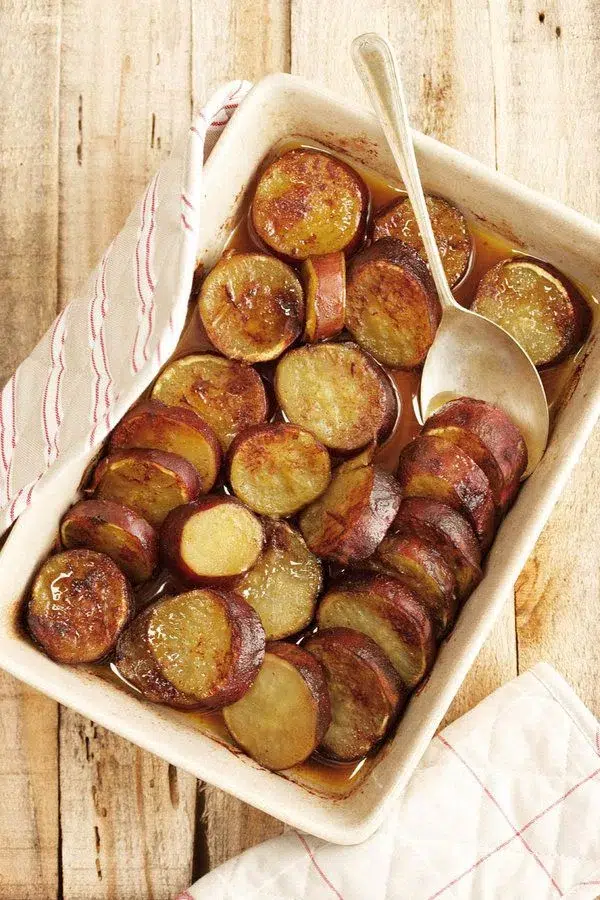
Sweet Potato (Soetpatat) Bake
Ingrédients
- 1 kg sweet potatoes (orange or white flesh)
- 3 tbsp butter (melted)
- 3 tbsp brown sugar (or honey)
- 1 tsp ground cinnamon
- ½ tsp ground nutmeg (optional)
- ¼ tsp salt
- ½ cup milk or cream
Instructions
- Preheat oven to 180°C.
- Peel and slice the sweet potatoes into thick rounds. Boil in salted water for about 10 minutes until just tender (not mushy). Drain well.
- Grease an oven dish. Layer the sweet potato slices inside.
- In a bowl, mix melted butter, sugar, cinnamon, nutmeg, salt, and milk/cream. Pour over the sweet potatoes.
- Bake uncovered for 30–40 minutes, until the top is golden, bubbly, and caramelised.
- Serve warm as a side dish with roasts, stews, or braai meat.