
Introduction
Boontjie bredie (Afrikaans for “bean stew”) is a beloved South African classic. In most homes, “boontjie” in this context means green beans—fresh runner or string beans cut into short lengths—and “bredie” refers to a style of slow-cooked stew in which onions are cooked down until sweet and saucy, then married with meat and seasonal veg. Here, lamb (or mutton) provides richness and depth while potatoes help thicken the gravy to a silky cling. The flavour profile is gentle and savoury—think onions, a little tomato for roundness, and black pepper—with optional Cape pantry touches like a stick of cinnamon or a clove or two.
Bredies are about patience, balance, and restraint. Rather than a long list of spices, you get character from slow sweating of onions, proper browning of meat, and an unhurried simmer that allows green beans to become tender without losing themselves. The result is a pot that tastes like home: affordable ingredients transformed into something deeply satisfying, perfect for feeding a crowd with rice, geelrys (yellow rice), pap, or crusty bread.
Tips & Techniques
- Choose the cut wisely: Lamb neck, shoulder, rib, or stewing pieces excel—collagen melts into body. Mutton gives even deeper flavour but needs a longer simmer.
- Brown, then sweat: Sear meat in batches until well browned; set aside. In the same pot, slowly cook onions with a pinch of salt until soft and lightly golden—this “jammy” base defines bredie.
- Tomato for balance (optional): A modest amount of tomato (fresh or tinned) rounds the savoury notes. Keep it subtle so the green beans remain the star.
- Layer the veg: Add potatoes before beans so they start softening and release starch to thicken the gravy. Beans go in once the stew has a base of flavour.
- Go easy on liquid: Bredie isn’t a soup. Add just enough water or light stock to come partway up the ingredients; top up in small splashes as it cooks.
- Low and slow: Gentle simmering (covered, with the lid ajar) lets lamb tenderise and gravy thicken naturally. Stir occasionally to prevent sticking.
- String the beans: With older runner beans, strip away any tough strings along the seams before cutting. Younger beans can be simply topped, tailed, and chopped.
- Simple seasoning, layered: Salt in stages—onions, then meat, then final adjust. Freshly ground black pepper near the end perks up the pot.
- Classic Cape hint: One stick of cinnamon or a clove or two can simmer quietly in the pot; remove before serving. It should whisper, not shout.
- Finish with brightness: A teaspoon of vinegar or a squeeze of lemon at the end lifts richness and keeps the stew from feeling heavy.
- Rest the pot: Like most stews, boontjie bredie is even better after 20–30 minutes of rest (or the next day). Flavours settle, and the gravy glosses over.
- Potjie & pressure cooker: Outdoors, cook in a potjie over gentle coals. For weeknights, pressure-cook to tenderise lamb, then reduce uncovered to the right consistency.
Delicious Variations
Protein & Base
- Beef Boontjie Bredie: Use beef chuck or shin; expect a slightly beefier, less lamby character and a touch longer reduction for gelatinous body.
- Vegetarian Comfort: Swap meat for hearty mushrooms (portobello, brown) and a spoon of olive oil; add extra potato for body and a splash of soy for umami.
- Mutton Traditionalist: Old-school flavour with mutton neck or rib. Simmer gently until truly tender; skim excess fat and balance with lemon.
Flavour Twists
- Onion & Cinnamon (Classic Cape): Keep spices minimal—just a cinnamon stick with peppercorns—yielding a clean, homely stew.
- Mild Curry Lean: Bloom a teaspoon or two of mild curry powder with the onions for subtle warmth. Don’t overpower the beans.
- Garlic & Herb: A few garlic cloves and a bay leaf or thyme sprig add depth; remove herbs before serving.
- Tomato-Forward: If you prefer a redder gravy, add a little more tomato and reduce slightly longer to maintain the bredie thickness.
Bean & Veg Options
- Frozen Green Beans: Absolutely fine—add from frozen toward the latter part of cooking to avoid mushiness.
- Flat Beans (Romano): Meatier texture and classic in many homes. Cut into short lengths for even cooking.
- Carrot Coins: A handful adds colour and gentle sweetness—keep modest so beans remain central.
- Baby Potatoes: Leave skins on for a rustic look; halve or quarter depending on size.
Serving Suggestions
- Geelrys (Yellow Rice): The hint of turmeric and raisins contrasts beautifully with the savoury stew.
- Plain Rice or Pap: Simple starches that soak up the glossy gravy.
- Crusty Bread: Tear and swipe—especially good with next-day leftovers.
- Sides with Snap: Serve with a tomato-and-onion sambal, pickled beetroot, or a crunchy slaw to cut richness.
- Braai Companion: Use the bredie as a make-ahead pot to serve alongside grilled chops or boerewors for a complete spread.
Frequently Asked Questions (FAQs)
Q1: Is boontjie bredie made with green beans or dry beans?
In most South African households, boontjie bredie means green bean stew with lamb and potatoes. Dry-bean stews exist, but this particular bredie is typically green-bean-based.
Q2: Can I use frozen beans?
Yes. Add from frozen in the latter half of the cook so they keep their shape. If they’re thin, reduce the simmer time slightly.
Q3: My gravy is watery—how do I fix it?
Uncover and simmer to reduce until glossy, or lightly mash a few potato cubes against the side of the pot to release starch. Avoid flour thickeners if you want the classic mouthfeel.
Q4: Which lamb cut is best?
Neck, shoulder, rib, or stewing cubes with some connective tissue. They transform into tenderness during a slow simmer and enrich the gravy.
Q5: Do I need tomatoes?
Not strictly. Some families use none, relying on onion sweetness and a hint of spice. Others add a small amount for roundness. Keep it balanced either way.
Q6: Can I pressure-cook it?
Yes. Cook lamb, onions, and potatoes under pressure until tender, then add beans and simmer uncovered to the desired thickness.
Q7: How do I keep the beans from going mushy?
Add them after the lamb is on its way to tender and the potatoes are softening. Simmer just until beans are tender but still hold their shape.
Q8: Can I make it ahead?
Definitely. Like most stews, it improves overnight. Reheat gently, loosen with a splash of water if needed, and brighten with a squeeze of lemon before serving.
Q9: What spices are traditional?
Salt and black pepper are the backbone. Some cooks add a stick of cinnamon or a clove for Cape character. Curry powder is a popular but optional twist.
Q10: How do I skim excess fat?
Let the stew rest a few minutes and spoon off surface fat. Or chill and remove the set layer before reheating for a lighter finish.
Lighter & Free-From Options
- Gluten-Free: Naturally GF if you skip flour thickeners. Thicken via reduction and potato.
- Dairy-Free: Classic versions are dairy-free; richness comes from lamb and onions.
- Lower Fat: Trim visible fat from lamb, skim during/after cooking, and finish with lemon for brightness.
- Vegetarian/Vegan: Use mushrooms and extra onions, olive oil for richness, vegetable stock, and a splash of soy or miso for umami.
- Low-Sodium Emphasis: Season gradually and finish with acid (lemon/vinegar) and fresh pepper to amplify flavour without excess salt.
Nutritional Notes & Cultural Background
Boontjie bredie is a balanced comfort dish: carbohydrates from potatoes and rice or pap, protein and fat from lamb, and fibre from green beans and onions. You can tailor richness by trimming meat and skimming fat, and you can boost vegetables (extra beans or carrots) for a lighter bowl without losing character. Portion thoughtfully and pair with crisp sides or a fresh sambal to keep the plate lively.
Culturally, bredies are pillars of Cape home cooking—seasonal stews defined by a particular vegetable (tomato bredie, waterblommetjiebredie, pumpkin bredie, and of course boontjie). Their technique—sweated onions, modest spice, gentle simmering—speaks to thrift and patience, producing deep flavour from simple ingredients. Every family has its signature ratio of onion to meat to veg, its stance on tomatoes and cinnamon, and its favourite starch on the side. However it’s made, boontjie bredie remains a pot that tastes like Sunday lunch and second helpings.
In Summary
Boontjie bredie is green-bean-and-lamb comfort in a pot: seared meat, jammy onions, just enough tomato, tender potatoes, and silky beans simmered to a glossy, spoon-coating gravy. Keep liquid modest, heat gentle, and seasoning simple; finish with a touch of acid and plenty of black pepper. Serve with rice, geelrys, pap, or bread, and enjoy a South African classic that rewards patience with every wholesome, homely bite.
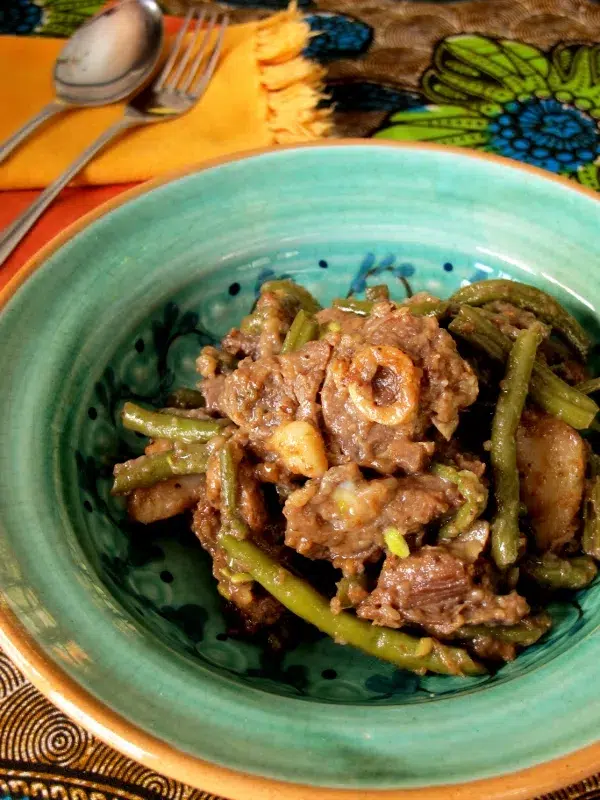
Green Bean Bredie (Boontjie Bredie)
Ingredients
- 500 g lamb or mutton (on the bone if possible), cut into pieces
- 500 g green beans, topped, tailed, and cut into 3–4 cm pieces
- 2 medium onions, finely chopped
- 3 medium potatoes, peeled and diced
- 2 cloves garlic, crushed
- 1 tsp ground ginger (or fresh grated)
- 1 tsp ground cinnamon
- 2–3 whole cloves (optional)
- 2 medium tomatoes, peeled & chopped (or 1 can chopped tomatoes)
- 1–2 tbsp oil or butter
- 1 cup beef or lamb stock (or water with 1 stock cube)
- 1–2 tsp sugar (optional)
- 1 bay leaf (optional)
- Fresh parsley for garnish (optional)
Instructions
- Heat oil/butter in a heavy pot. Brown the meat pieces well on all sides. Remove and set aside.
- In the same pot, sauté onions until golden. Add garlic, ginger, cinnamon, and cloves. Fry gently until fragrant.
- Return meat to the pot. Stir in tomatoes and cook for 5 minutes until softened.
- Add potatoes, stock, salt, and pepper. Cover and simmer on low for about 45–60 minutes, until the meat is tender. (Add a little more water if it dries out.)
- Add the green beans and cook another 20–30 minutes, until beans and potatoes are soft and the stew is thick.
- Taste and adjust seasoning (a pinch of sugar often balances the flavor nicely).
- Serve hot with white rice or crusty bread.