Image source: SA Pork
Introducción
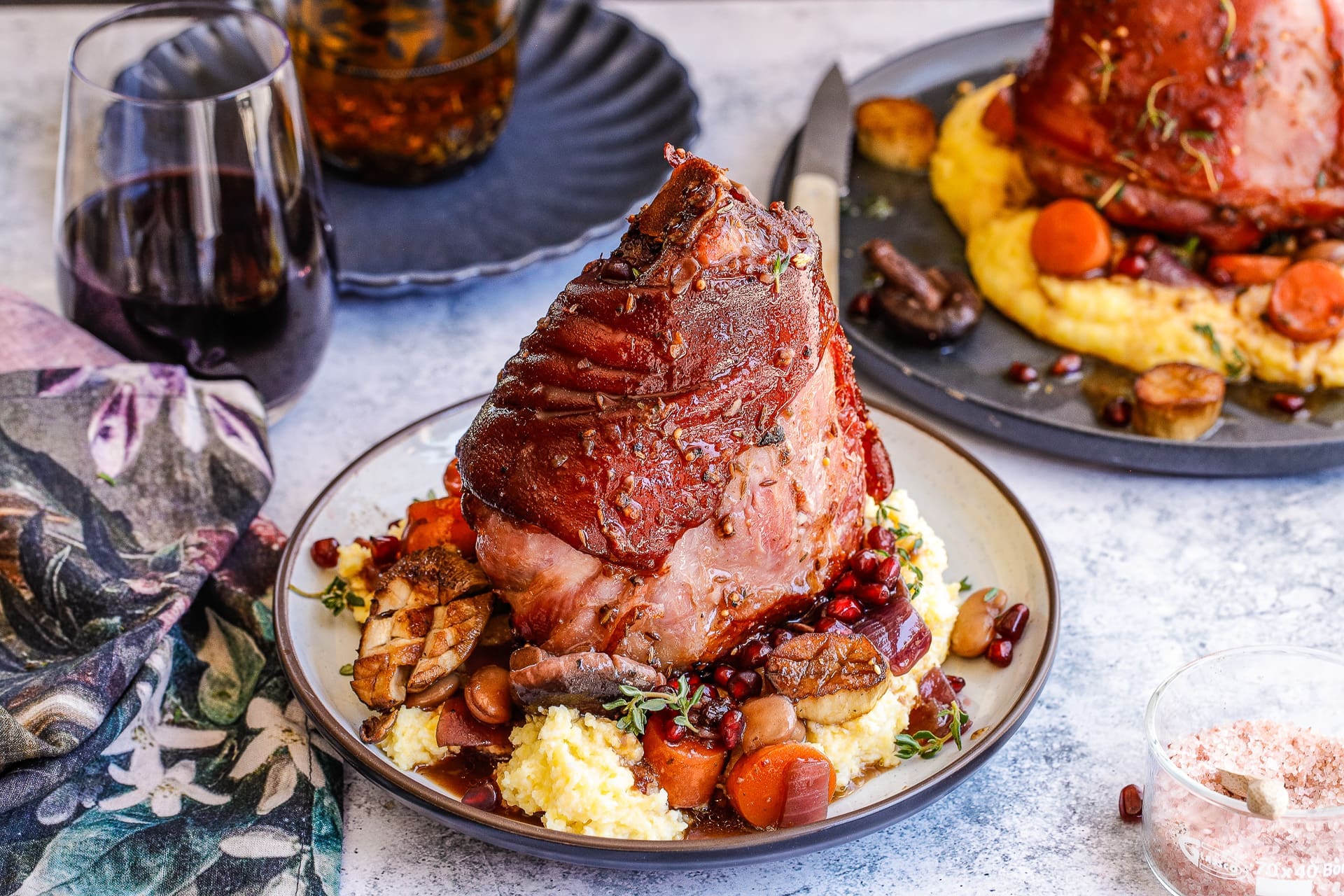
Eisbein is a traditional German-style pork knuckle dish that is slow-cooked or braised until the meat becomes tender, juicy, and falling off the bone, with a rich savoury flavour and crispy golden crackling skin when finished in the oven or grill. Popular in South Africa as well as Europe, it is a hearty comfort meal often enjoyed in colder weather, at pubs, or during special family gatherings. Eisbein is commonly served with sauerkraut, mashed potatoes, mustard, and gravy.Consejos y técnicas
- Slow cooking is essential: Simmer the eisbein gently for several hours until the meat is soft and tender.
- Don’t rush the process: High heat will make the meat tough instead of juicy.
- Dry the skin before roasting: This helps achieve crispy crackling.
- Finish in the oven: Roasting at high heat gives the skin a golden, crispy texture.
- Season well: Use salt, pepper, bay leaves, and aromatics to build deep flavour.
Deliciosas variaciones
Flavour Variations
- Beer-braised eisbein: Cook in dark beer for a deeper, richer flavour.
- Garlic and herb version: Add rosemary, thyme, and extra garlic to the broth.
- Smoked eisbein: Add smoked paprika or use smoked pork knuckle for extra depth.
- Honey-glazed finish: Brush with honey or mustard glaze before roasting for a sweet-savoury crust.
Sugerencias para servir
- Classic German style: Serve with sauerkraut, mustard, and boiled potatoes.
- South African style: Pair with pap, gravy, and pickled vegetables.
- Pub meal: Serve with chips and onion rings.
- Comfort plate: Add creamy mashed potatoes and roasted vegetables.
Preguntas más frecuentes (FAQ)
Q1: What is eisbein?
Eisbein is a pork knuckle dish that is slow-cooked until tender, then often roasted to achieve crispy skin.Q2: Is eisbein the same as pork knuckle?
Yes, eisbein refers to pork knuckle, especially in German cuisine.Q3: How long does eisbein take to cook?
It usually takes 2.5 to 4 hours depending on size, including both simmering and roasting.Q4: How do you get crispy eisbein skin?
Dry the skin well after boiling and roast at high heat until it becomes crackling and golden.Opciones más ligeras y sin gluten
- Lower-fat option: Remove excess fat and serve smaller portions.
- Lower-salt version: Use less salt in the cooking broth and rely on herbs for flavour.
- Dairy-free option: Naturally dairy-free unless served with creamy sides.
- Healthier sides: Serve with steamed vegetables or fresh salad instead of heavy starches.
Notas nutricionales y antecedentes culturales
Eisbein is a traditional European comfort dish with strong German origins, widely enjoyed in South Africa through German culinary influence. It is valued for its rich, hearty flavour and slow-cooked tenderness. Often associated with pub meals and festive gatherings, it represents classic rustic cooking that transforms a tough cut of meat into a tender, flavourful dish.En resumen
Eisbein is a slow-cooked pork knuckle dish known for its tender meat and crispy crackling skin. Rich, hearty, and full of flavour, it is a comforting meal often served with sauerkraut, mustard, and potatoes.Eisbein
Eisbein. This authentic recipe is simple to make and guaranteed to impress.
Plato Plato principal
Cocina Sudáfrica
Raciones 4 gente
Ingredientes
- 1-2 pork knuckles (eisbein)
- 2 onions, chopped
- 3-4 garlic cloves, crushed
- 2 zanahorias picadas
- 2 hojas de laurel
- 1-2 cucharadita pimienta negra en grano
- 1 cucharada salt (adjust to taste)
- 1 cucharadita pimentón (opcional)
- 2-3 tazas water or stock
- beer for extra flavour (opcional)
Elaboración paso a paso
- Rinse the pork knuckles and pat dry.
- Place them in a large pot and add onions, garlic, carrots, bay leaves, peppercorns, salt, and paprika.
- Pour in enough water or stock to cover most of the meat.
- Bring to a boil, then reduce heat and simmer gently for 2.5 to 3 hours until the meat is very tender.
- Remove the eisbein from the liquid and pat the skin dry.
- Optional step: Place in a hot oven (200°C) or under a grill for 20–30 minutes until the skin is crispy and golden.
- Let rest for a few minutes before serving.
Palabra clave Carne