
Introducción
Samp and Beans—widely known as umngqusho—is a beloved South African staple made by simmering cracked, dried maize kernels (samp) with beans until soft, creamy, and deeply satisfying. It’s everyday food with celebration energy: economical, hearty, and endlessly adaptable. Enjoy it plain with butter and a little salt, stirred with sautéed onions and tomatoes, or enriched with stock and spices for a fuller flavour. As a side, it pairs beautifully with stews, curries, and braai meats; as a main, it’s filling and nourishing on its own with a crunchy salad or a spoon of chakalaka.
What makes umngqusho special is its texture—part tender grains, part creamy stew—and its flexibility. You can keep it rustic and simple, or layer in aromatics for a richer profile. It’s also ideal for feeding a crowd and reheats well, making it a smart make-ahead for busy weeks.
Consejos y técnicas
- Rinse thoroughly: Wash samp and beans in cold water until it runs mostly clear to remove excess starch and dust.
- Soak for speed: An overnight soak (in plenty of water) shortens cook time and helps beans cook evenly. If you forget, use a quick-soak: cover with boiling water, rest 1 hour, drain, and proceed.
- Separate or together? You can soak together, but for even cooking, begin simmering beans a little earlier if they’re tougher than the samp you’re using, then add samp later.
- Use enough liquid: Keep a kettle of hot water or stock nearby. Add in small amounts if the pot looks dry—umngqusho should be moist and spoonable, not soupy.
- Gentle simmer: Maintain a low bubble and stir occasionally to prevent sticking. Vigorous boiling can split beans and toughen skins.
- Salt timing: Salt early for flavour if your beans are fresh or well-soaked. If your beans are older, salt halfway through to avoid toughness. Taste and adjust at the end.
- Flavour base: For fuller taste, sweat chopped onion in a little oil or butter until sweet, then add garlic, bay leaf, thyme, mild curry powder, or paprika before stirring in the samp and beans.
- Creamy vs. separate grains: Stir more toward the end (or mash a small portion against the pot) for a creamier finish. Stir less and keep the liquid modest for more distinct kernels.
- Pressure cooker friendly: After soaking, cook on high pressure until both samp and beans are tender; use natural release for best texture. Add aromatics beforehand and adjust seasoning afterward.
- Make ahead & reheat: Umngqusho thickens as it stands. Reheat with a splash of hot water or stock and a knob of butter or drizzle of oil to restore silkiness.
Deliciosas variaciones
Protein & Savoury Add-Ins
- Onion & Tomato Smoor: Stir in a quick tomato-onion smoor for gentle acidity and colour.
- Smoky Notes: Add smoked paprika or a few slices of crispy bacon (or smoked sausage) for depth. For a meat-free echo, try smoked salt.
- Greens & Corn: Fold in sautéed spinach or morogo and a handful of sweet corn kernels near the end for freshness.
- Curry Warmth: Season with mild curry powder, turmeric, and coriander; finish with chopped coriander leaves and lemon.
- Hearty Pot: Simmer with beef shin or soup bones, then remove the meat, shred, and fold back in (optional, not traditional for every household).
Texture & Consistency Tweaks
- Creamier Finish: Stir in a spoon of butter or a splash of cream/coconut milk at the end.
- Looser Spoon-Up: Add a little hot stock just before serving for a glossy, looser consistency.
- Chunky & Rustic: Keep liquid lower and stir gently; serve with a separate gravy or stew.
Intercambios de productos sin gluten y de despensa
- Vegano: Use oil instead of butter and vegetable stock for simmering.
- Low-Sodium: Build flavour with onions, garlic, herbs, and spices; finish with lemon for brightness rather than extra salt.
- Beans: Sugar beans are classic; kidney beans, haricots, or black-eyed beans also work. If using canned beans, cook samp separately and fold drained beans in at the end.
Sugerencias para servir
- With Stew or Curry: Serve alongside beef stew, chicken curry, or tomato-rich gravies; umngqusho soaks up sauces beautifully.
- Plato Braai: Pair with boerewors, chakalaka, and a crisp green salad.
- Comfort Bowl: Top a warm bowl with caramelised onions, a dab of chutney, and chopped parsley.
- Lunch Box: Pack cooled portions with a side of tomato-onion sambal and sliced avocado.
- Festival Spread: Garnish with fresh herbs and a drizzle of chilli oil for a buffet-ready dish.
Preguntas más frecuentes (FAQ)
Q1: Do I have to soak the samp and beans?
Soaking isn’t strictly required, but it helps both cook faster and more evenly. If unsoaked, expect a longer simmer and keep liquid topped up.
Q2: Can I cook umngqusho in a pressure cooker?
Yes. After soaking, cook on high pressure until tender (timing depends on bean age). Use natural release and adjust seasoning and texture afterward.
Q3: Mine is too watery—how can I thicken it?
Simmer uncovered for a few minutes and stir more to release starch. You can also mash a small ladleful against the side of the pot and stir back in.
Q4: It’s too thick—how do I loosen it?
Stir in hot water or stock a splash at a time until it’s spoonable. Re-season to taste.
Q5: Which beans are best?
Sugar beans are traditional and hold their shape well. Haricots, kidney beans, or black-eyed beans are good alternatives—adjust cooking time as needed.
Q6: When should I salt?
Salt halfway through or toward the end if your beans are older; earlier if they’re fresh and well-soaked. Always taste and adjust near serving.
Q7: Can I freeze umngqusho?
Yes. Cool completely, portion, and freeze. Reheat with a little water or stock, stirring to restore creaminess.
Q8: How do I reduce “gassiness” from beans?
Soak, then discard soaking water and cook in fresh water/stock. Adding aromatics like bay leaf and cumin can help with digestibility.
Q9: Can I use canned beans to save time?
Absolutely. Cook samp until tender, then fold in drained, rinsed canned beans and simmer briefly so flavours meld.
Q10: What’s the difference between samp and maize meal (pap)?
Samp is dried maize cracked into coarse pieces and cooked whole. Pap/ugali is finely ground maize cooked as a porridge or stiff pap—the texture and cooking methods are different.
Notas nutricionales y antecedentes culturales
Umngqusho is naturally balanced: complex carbohydrates from maize and fibre-rich beans, plus plant protein that makes it filling and sustaining. Pair it with leafy greens, salads, or a simple relish to round out the plate. Culturally, it’s deeply rooted across South Africa—especially in Xhosa communities—where pots of samp and beans bring households together for everyday meals and special gatherings alike. Its popularity comes from thrift, versatility, and the simple pleasure of a warm, generous bowl.
En resumen
Samp and Beans (umngqusho) is South African comfort at its best—humble ingredients transformed into something creamy, hearty, and shareable. Rinse well, soak if you can, simmer gently, and season thoughtfully. Serve it plain with butter, dressed with onions and tomatoes, or alongside stews and braai favourites. It’s adaptable, economical, and always welcome at the table.
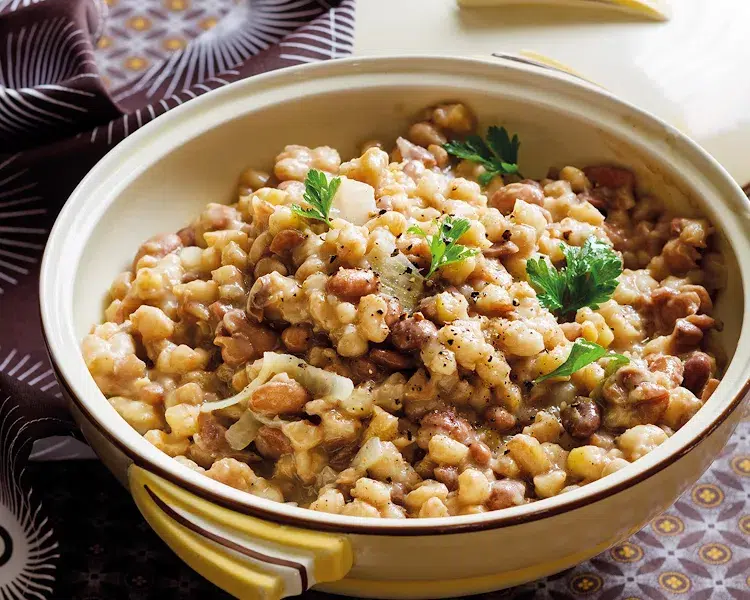
Samp y Frijoles (Umngqusho)
Ingredientes
- 2 tazas samp
- 1½ tazas sugar beans (or any dry speckled/brown beans)
- 1 cucharadita sal
- agua (enough for soaking & boiling)
- 1 onion onion (chopped) (opcional)
- 2 Cucharada cooking oil or butter (opcional)
- 1 stock vegetable stock cube (opcional)
- Al gusto pimienta negra (opcional)
Elaboración paso a paso
- Rinse and soak (overnight if possible): Wash the samp and beans. Soak in water for at least 6 hours or overnight. This softens them and reduces cooking time.
- Boil together: Drain the soaking water. Place samp and beans in a pot, cover with fresh water (about 4–5 cups), and bring to a boil.
- Cocer a fuego lento: Lower heat and simmer gently for 2–3 hours, stirring occasionally and topping up with water as needed. Cook until both the samp and beans are soft and breaking open.
- Add flavour (optional but recommended): In a separate pan, fry chopped onion in oil or butter. Add to the pot along with salt, stock cube, and pepper. Stir through and simmer 10 more minutes.
- Sirve: warm as a main or side