Introducción
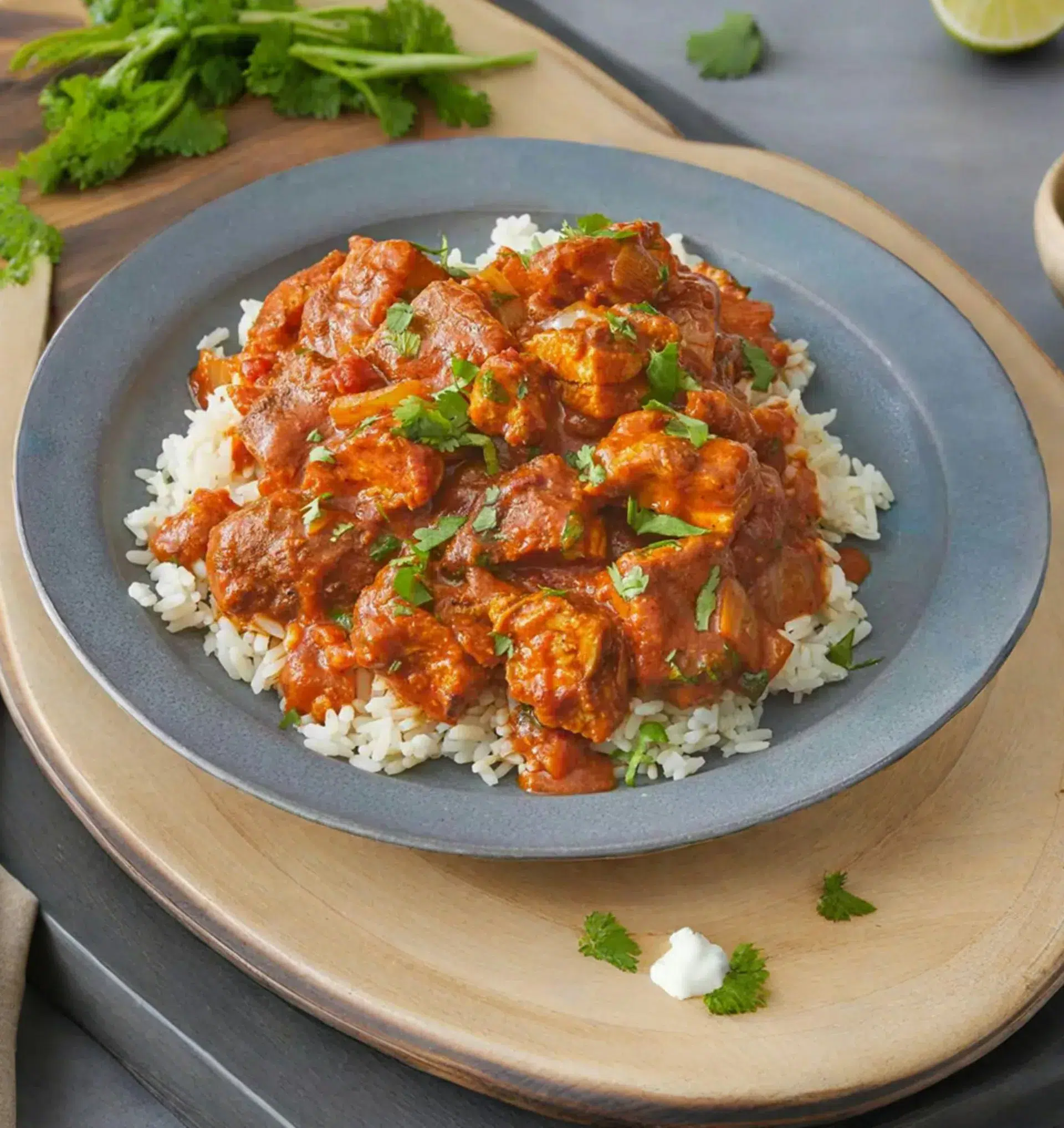
Durban curry is South Africa’s boldest curry style: vivid brick-red colour, assertive heat, and a glossy, full-bodied gravy built on onions, tomatoes, and a distinctive Durban masala. Unlike milder Cape Malay curries (often sweet-spiced with dried fruit), Durban curry leans savoury and hot, with a clean chilli bite, aromatic curry leaves, and the welcome comfort of soft potatoes soaking up the gravy. Whether made with beef, mutton, chicken, seafood, or beans, it’s built for a big family pot and served simply with rice and sambals—or piled into a quarter-loaf for an iconic bunny chow.
The magic lies in patiently cooking the base until the oil separates, blooming the spices until fragrant, then simmering gently so the gravy reduces to a silky consistency. A splash of vinegar or lemon at the end “wakes up” the flavours and brings the dish into perfect balance.
Consejos y técnicas
- Onion foundation: Cook onions low and slow to a deep golden. This sweetness balances heat and adds body to the gravy.
- Bloom the masala: Stir your Durban masala (and ground spices) into hot fat for 30–60 seconds until aromatic—this opens the spice oils and prevents raw flavours.
- Oil separation = flavour: After adding tomatoes, cook until the oil “breaks” and rises—your cue that the base is cohesive and the gravy will shine.
- Potatoes matter: Use firm, waxy potatoes cut into large wedges so they keep shape and drink up the gravy without disintegrating.
- Curry leaves & whole spices: Temper mustard seeds and add fresh curry leaves for authentic aroma. If using bay leaf, keep it minimal so it doesn’t dominate.
- Control del calor: Durban masalas vary. Start slightly under your usual chilli level and adjust near the end—reducing sauce concentrates heat.
- Acid lift: Finish with a teaspoon or two of vinegar or lemon juice. It brightens the gravy and balances richness.
- Rest time: Like all great curries, Durban curry tastes even better after 20–30 minutes of resting (or overnight in the fridge) as flavours marry.
Deliciosas variaciones
Protein Choices
- Beef or Mutton: Classic, richly flavoured cuts (chuck, brisket, shoulder) that benefit from longer simmering.
- Chicken: Bone-in thighs/drumsticks stay juicy and absorb spice beautifully; quicker to cook than red meat.
- Prawn or Fish: Keep the gravy base thick, then add seafood near the end so it stays tender.
- Bean & Potato: Kidney beans or sugar beans with potatoes and carrots for a hearty vegetarian pot.
Masala & Spice Twists
- Homestyle Blend: Mix your Durban masala with extra ground cumin and coriander for earthiness.
- Smoky Heat: Add a pinch of smoked paprika with the chilli for a braai-like depth.
- Ginger-Garlic Boost: Pound fresh ginger and garlic into a paste for a brighter, fresher backbone.
Textura y cuerpo
- Thicker Gravy: Reduce uncovered until glossy, or mash one potato cube into the sauce to naturally thicken.
- Acabado Saucier: Add a splash of hot stock if the curry tightens too much during resting.
Sugerencias para servir
- Rice & Sambals: Serve with fluffy white rice, tomato-onion sambal, and fresh coriander.
- Bunny Chow: Hollow out a quarter- or half-loaf of fresh white bread, spoon in curry, and cap with the bread “lid.”
- Rotis or Puri: Offer warm rotis or puris to scoop up gravy; add a side of cucumber raita to cool the palate.
- Braai Side: Durban curry pairs brilliantly with grilled chops or boerewors as a spicy centrepiece.
Preguntas más frecuentes (FAQ)
Q1: What makes Durban curry different from other South African curries?
It’s hotter, redder, and more savoury. Durban masala and fresh curry leaves drive the flavour, while slow-cooked onions and tomatoes form a glossy, oil-separated gravy. Cape Malay curries, by contrast, are milder and often sweet-spiced.
Q2: Do I need Durban masala specifically?
It’s ideal, but if you can’t find it, use a hot curry powder plus extra chilli, cumin, coriander, and turmeric. Add fresh curry leaves to mimic signature aroma.
Q3: My curry tastes bitter—what happened?
Spices may have scorched or the masala cooked too long dry. Next time, bloom spices briefly in enough oil and add tomatoes soon after. Balance with a pinch of sugar and a splash of vinegar or lemon at the end.
Q4: How do I get that rich red colour?
Quality chilli powder and paprika, well-reduced tomatoes, and oil separation. Don’t rely on food colouring—proper technique gives natural colour.
Q5: Can I make this in a slow cooker?
Yes. Build the base on the stove (onions, spice bloom, tomatoes) until oil separates, then transfer to the slow cooker with meat and potatoes. Finish with acid and fresh herbs.
Q6: How spicy should it be?
Durban curry traditionally packs heat, but it’s your kitchen—dial back chilli for family-friendly bowls and offer chopped green chilli at the table.
Q7: Does it freeze well?
Beautifully. Cool completely, pack in portions, and freeze up to 2–3 months. Potatoes soften slightly but still soak up flavour on reheat.
Q8: Which potatoes are best?
Waxy or all-purpose potatoes (e.g., small whites or firm golds) hold their shape. Cut large wedges so they don’t disappear into the gravy.
Contexto cultural
Durban curry traces back to the Indian community of KwaZulu-Natal, whose ancestors arrived in the 19th century. Over time, local ingredients and tastes shaped a distinct style—bright chilli heat, curry leaves, and that characteristic red gravy. The dish is woven into Durban’s food identity, from home pots to take-away counters and the street-icon bunny chow. Today, Durban curry is celebrated far beyond the city—synonymous with hospitality, spice, and proudly South African flavour.
En resumen
Durban-style curry and rice is bold, aromatic comfort—slow-built flavour, tender meat or veg, and a glossy, red gravy that sings with heat and balance. Master the onion-tomato base, bloom your masala, let the oil separate, and finish with a bright splash of acid. Serve with rice or tuck into bread for bunny chow, and you’ve got a true South African classic on the table.
Curry y arroz (al estilo de Durban)
Ingredientes
- 2 cucharada aceite
- 1 cebolla grande finamente picado
- 2 cloves garlic minced
- 1 cucharada jengibre fresco rallado
- 2 cucharadita curry en polvo
- 1 cucharadita garam masala
- 1 cucharadita cilantro molido
- 1 cucharadita cúrcuma
- 1 cucharadita pimentón
- 1-2 cucharadita chile en polvo (adjust to heat preference)
- 500 g meat (beef, lamb, chicken) or vegetables (potatoes, lentils, or chickpeas)
- 2 large tomatoes, chopped (or 1 can chopped tomatoes)
- 1 cucharada pasta de tomate
- 1 taza water or stock
- Al gusto sal
- fresh coriander para adornar
- cooked white or yellow rice para servir
Elaboración paso a paso
- Heat 2 tbsp oil in a large pot over medium heat.
- Add 1 large finely chopped onion and fry until golden, about 5 to 7 minutes.
- Add 2 minced garlic cloves and 1 tbsp grated fresh ginger. Cook for 1 minute, stirring often.
- Stir in 2 tsp curry powder, 1 tsp garam masala, 1 tsp ground coriander, 1 tsp turmeric, 1 tsp paprika, and 1 to 2 tsp chilli powder. Cook for 30 seconds until fragrant.
- Add 500g of your choice of meat or vegetables. Stir well to coat them evenly with the spices.
- Add 2 chopped large tomatoes (or 1 can chopped tomatoes) and 1 tbsp tomato paste. Mix well.
- Pour in 1 cup water or stock. Season with salt to taste.
- Bring the mixture to a simmer, then reduce heat to low. Cook uncovered for 30 to 45 minutes, stirring occasionally, until the meat is tender and the sauce thickens. Add extra water if needed during cooking.
- Serve the curry hot over the cooked rice. Garnish with fresh coriander if you like.

